
 English
 Español
 العربية
In modern heavy machinery, wind turbine generation, mining equipment, marine engineering, and automated production lines, power transmission systems function as the central “nervous system and skeleton” of equipment assemblies. Whether deployed for intersecting shaft power transfer via BEVEL GEARS, efficient parallel shaft transmission through SPUR GEARS and Cylindrical Gears, smooth and low-noise operation via Helical Gears, or long-span torque transmission through drive shafts, industrial shafts, spline shafts, and Herringbone Gear shafts, the manufacturing precision and reliability of these core components directly dictate the operational lifespan and efficiency of the entire industrial system.
However, for global industrial procurement directors, engineering project leads, and supply chain experts, custom overseas sourcing is far from a simple matter of “submitting blueprints for the lowest bid.” Amid complex international trade environments and long-cycle engineering projects, enterprises consistently confront multi-layered challenges: How can non-standard custom blueprint precision be guaranteed? How do you defend a non-negotiable quality baseline? How are supply chain bottlenecks across diverse product categories resolved? And how can financial cash flow pressure be mitigated throughout prolonged project lifecycles?
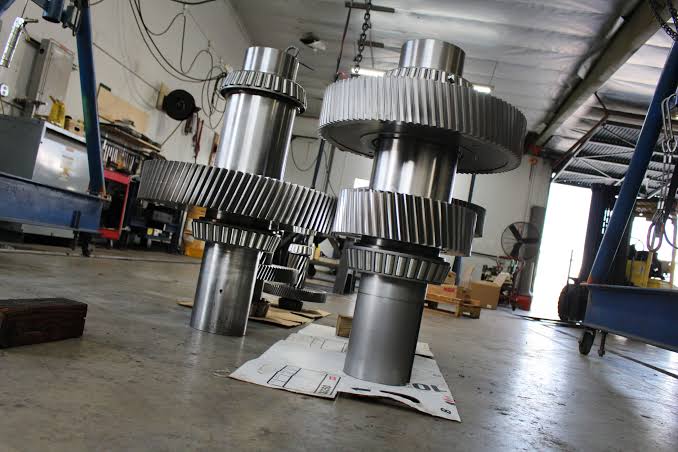
Procurement is much more than a routine parts transaction—it is a comprehensive test of a supplier’s integrated problem-solving capacity and risk mitigation framework. Selecting a strategic partner equipped with robust core manufacturing technologies while capable of sharing financial and operational burdens on behalf of enterprise clients is the cornerstone of project success.
1. Technical Barriers & Blueprint Customization Requirements for Gear and Shaft Transmission Systems
Mechanical transmission systems represent an integrated ecosystem requiring precise synchronization. Machining an isolated gear is straightforward; the real test lies in coordinating BEVEL GEARS, SPUR GEARS, Cylindrical Gears, Helical Gears, and various drive shafts, industrial shafts, and spline shafts into a seamless, high-performance assembly.
+------------------------------------------------------------------------------------------------+
|                        INTEGRATED TRANSMISSION SYSTEM COMPONENTS                               |
+----------------------+---------------------------------------+---------------------------------+
| Component Category   | Core Product Types                    | Manufacturing & Fitting Focus   |
+----------------------+---------------------------------------+---------------------------------+
| Precision Gears      | BEVEL GEAR, SPUR GEAR,                | Tooth profile precision,        |
|                      | Cylindrical Gear, Helical Gear        | heat treatment & contact area   |
+----------------------+---------------------------------------+---------------------------------+
| Shaft Assemblies     | drive shaft, industrial shaft,        | Dynamic balance, straightness,  |
|                      | spline shaft, Herringbone Gear shaft  | spline pitch & surface hardness |
+----------------------+---------------------------------------+---------------------------------+
| System Integration   | Complete gear-shaft matched sets      | Cumulative tolerance control,   |
|                      | according to client blueprints        | backlash & noise suppression    |
+----------------------+---------------------------------------+---------------------------------+
1. Machining Complexities of Core Gear Types
- BEVEL GEAR: Utilized for intersecting shaft transmissions where tooth surfaces form complex spatial geometries (such as spiral bevel gears). The primary manufacturing challenge lies in controlling thermal stress distortion during carburizing and quenching, alongside adjusting tooth contact patterns during assembly.
- SPUR GEAR & Cylindrical Gear: Serving as the foundation of parallel-axis drives, high-volume production rigorously tests a supplier’s stability in controlling cumulative pitch errors, tooth profile tolerances, and raw material metallurgical purity.
- Helical Gear: Delivers smooth meshing and high contact ratios, yet demands extreme precision in helix angle machining. Because they generate operational axial thrust, they require precise matching with bearing and housing load designs.
2. Coordinated Matching of Drive Shafts and Spline Shafts
- drive shaft & industrial shaft: Subjected to long-distance torque transmission and alternating stress impacts, demanding rigorous control over coaxiality, straightness, and dynamic balancing.
- spline shaft: The tooth thickness tolerance and positional accuracy of the spline directly determine centering precision with mating components. Excessive tightness risks jamming, while excessive looseness induces impact wear during frequent reversing cycles.
- Herringbone Gear shaft: Combines the smooth transmission of helical gears with zero axial force, but features extremely demanding undercut designs and left/right helix symmetry requirements, testing multi-axis CNC and dedicated machine capabilities.
When clients supply complex engineering blueprints, partnering with a facility capable of executing integrated, blueprint-based manufacturing for both “gears and shafts” eliminates cumulative assembly tolerance stack-ups right at the source.
Two. Guarding the Quality Baseline: Never Compromising on Client Product Quality
In heavy industry, any premature failure of a transmission component generates exponential cost losses. “Never compromising client quality” is not merely a slogan—it is our absolute operational bottom line.
1. The Hidden Costs of Quality Defects
Many procurement teams fixate solely on unit pricing during initial quoting, overlooking the massive financial exposure tied to quality risks:
- Unplanned Downtime Losses: A single day of unexpected stoppage in a mining excavation rig or wind turbine gearbox generates tens or hundreds of thousands of dollars in lost productivity.
- Cascading Equipment Damage: Broken gear teeth or sheared spline shafts shed metal debris that rapidly wrecks adjacent bearings and destroys entire gearbox housings.
- Exorbitant Cross-Border Warranty Costs: On-site disassembly, international technician dispatch, and expedited air-freight replacements for overseas projects far outweigh the initial value of the parts.
2. Constructing an End-to-End Zero-Defect QA System
Defending the quality baseline relies entirely on rigorous quality management frameworks (such as ISO 9001 and IATF 16949):
- Raw Material Metallurgical Traceability: Sourcing exclusively from premier specialty steel mills (e.g., 20CrMnTi, 42CrMo/4140, 34CrNi3Mo), providing material test certificates (MTC) conforming to ISO 10474 / EN 10204 3.1 for every batch, paired with ultrasonic testing (UT) to guarantee freedom from internal porosity or inclusions.
- Precision-Controlled Heat Treatment: Heat treatment represents the “soul” of gears and shafts. Operating in-house or strictly controlled atmosphere carburizing, nitriding, and induction hardening lines allows precise control over effective case depth (ECD) and core toughness balance, backed by hardness gradient curves and metallographic analysis reports.
- High-Metrology Inspection Fleet: Equipped with Gear Measuring Centers (GMC), Coordinate Measuring Machines (CMM), and Magnetic Particle Inspection (MT) systems to conduct 100% full inspection or rigorous sampling of tooth profiles, leads, surface roughness, and micro-cracks, ensuring zero defects upon dispatch.
Three. Empowering Enterprise Clients: Easing Capital Pressure & Solving Supply Chain Bottlenecks
For medium-to-large global industrial enterprises, a supplier’s value extends far beyond traditional manufacturing into deep synchronization across financial flows, logistics, and technical data.
1. Assisting Large Clients in Sharing Capital Strains
Large-scale industrial projects (such as turnkey production line construction or heavy mining equipment packaging) typically involve extended procurement cycles, heavy capital tie-ups, and delayed final payment milestones. Requiring buyers to pre-fund entire orders upfront places immense strain on corporate cash flow.
- Flexible Commercial Settlement Structures: For long-term enterprise accounts with established credit, financially stable suppliers leverage robust capital reserves to provide elastic payment solutions (such as Letters of Credit L/C, bank acceptance bills, phased milestone payments, or extended credit terms).
- Optimizing Cash Flow Velocity: Assisting clients in distributing upfront material and manufacturing financial burdens frees up valuable working capital to invest in core R&D and market expansion, driving true win-win growth.
2. Robust Supply Chains: Resolving Procurement Bottlenecks
Industrial procurement environments are inherently complex: acquiring rare corrosion-resistant alloy steels, securing specialized heat treatment furnaces for oversized non-standard modules, or assembling dozens of distinct gear and shaft variants under tight deadlines.
- End-to-End Industrial Resource Orchestration: Capable suppliers possess deep industrial resource networks, efficiently executing specialized surface treatments (hard chrome plating, nitriding, phosphating), deep-hole shaft boring, and large herringbone gear milling within a streamlined ecosystem.
- Streamlined Sourcing Nodes: Clients eliminate the overhead of managing independent forging plants, machine shops, heat treatment facilities, and testing labs, interfacing instead with a unified supply chain window that slashes administrative supply chain overhead by over 50%.
3. Professional Communication: Saving Engineering Time and Effort
Cross-border engineering procurement is most draining when hampered by “technical language barriers” and information asymmetry.
- Seamless Cross-Border Standards Alignment: Dedicated technical support teams effortlessly read and interpret complex English engineering drawings, GD&T geometric tolerancing callouts, and smooth conversion across GB, DIN, ASTM, ISO, and JIS standards.
- Proactive Value Engineering (VE) Collaboration: Evaluating technical blueprints for manufacturability (DFM) right from project initiation. Whenever stress concentrations, machining blind spots, or unnecessarily restrictive tolerances are identified, proactive optimization proposals are submitted to lower costs while enhancing reliability.
- Transparent Production Milestone Tracking: Delivering structured Production Milestone Tracking reports gives procurement managers real-time visibility across blanking, machining, heat treatment, grinding, and inspection stages, removing the need for stressful follow-up chasing.
Four. International Sourcing Evaluation Checklist: How to Screen Qualified Suppliers
When selecting custom manufacturing partners for BEVEL GEARS, SPUR GEARS, Cylindrical Gears, Helical Gears, and various industrial shafts, procurement teams are encouraged to evaluate vendors against the following benchmarks:
+------------------------------------------------------------------------------------------------+
|                              SUPPLIER EVALUATION CHECKLIST                                     |
+----------------------+---------------------------------------+---------------------------------+
| Assessment Dimension | Verification Items                    | Qualification Baseline          |
+----------------------+---------------------------------------+---------------------------------+
| Technical & Design   | - Blueprint processing & DFM review   | Full tolerance & standard       |
|                      | - Integrated gear-shaft system supply | conversion capability           |
+----------------------+---------------------------------------+---------------------------------+
| Quality Assurance    | - Raw material MTC (EN 10204 3.1)     | GMC, CMM, NDT testing,          |
|                      | - Hardness depth & crack inspection   | ISO/IATF quality system         |
+----------------------+---------------------------------------+---------------------------------+
| Supply Chain Capacity| - Special material & treatment access | Ability to solve non-standard   |
|                      | - On-time delivery reliability        | processing bottlenecks          |
+----------------------+---------------------------------------+---------------------------------+
| Financial & Service  | - Flexible payment & credit support   | Clear project milestone tracking|
|                      | - Technical communication efficiency  | and multilingual engineer team  |
+----------------------+---------------------------------------+---------------------------------+
- System-Level Customization Capability: Can the supplier simultaneously machine precision gears (bevel, spur, helical) and shafts (drive shafts, spline shafts, herringbone gear shafts) according to client blueprints under one roof?
- Hard Quality Control Core Strength: Do they provide certified material test reports (MTC), heat treatment hardness depth curves, and inspection data validated by gear measuring centers (GMC)?
- Supply Chain Problem-Solving Capacity: Do they maintain mature contingency planning and resource scheduling to handle specialized alloys, oversized dimensions, or emergency delivery schedules?
- Commercial Financial Elasticity: Are they willing and able to provide reasonable credit terms or structured installment payment support for major accounts to alleviate buyer cash flow pressure?
- Professional Communication Efficiency: Do they supply dedicated engineering support contacts who accurately interpret technical specifics and deliver timely production updates?
Five. Conclusion: Building Long-Term Strategic Partnerships
Selecting a high-caliber supplier for BEVEL GEARS, SPUR GEARS, Cylindrical Gears, Helical Gears, drive shafts, industrial shafts, and spline shafts transcends acquiring individual mechanical parts—it builds a secure, efficient, and resilient global supply chain for your enterprise.
In a fiercely competitive global industrial landscape, partnering with a supplier that steadfastly guards the quality baseline to protect equipment safety, resolves complex bottlenecks through robust supply chains, eases financial strain via flexible credit support, and saves valuable engineering time through efficient communication represents your most valuable strategic asset in industrial manufacturing.