
 English
 Español
 العربية
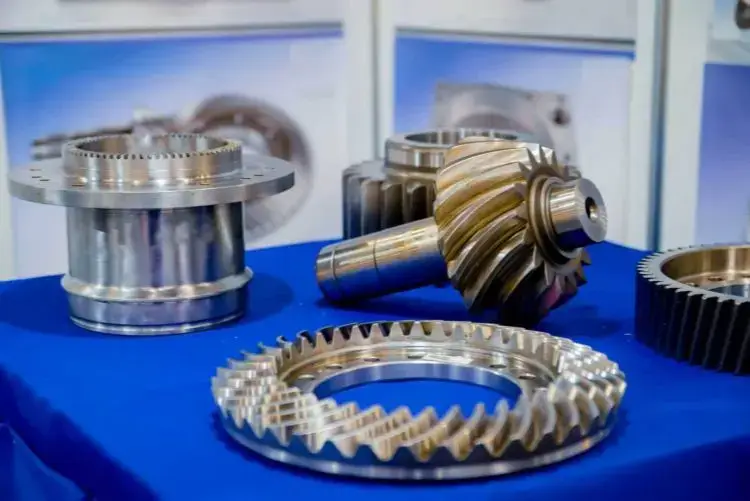
In modern industrial mechanical drive systems, gears and drive shafts act as the very “heart and nervous system” of the equipment. Whether in heavy mining machinery, precision automated production lines, wind power generation, or automotive engineering, Bevel Gears, Spur Gears, Cylindrical Gears, and Helical Gears are essential core components for transmitting power, altering speed, and adjusting torque.
However, for mechanical engineers, procurement managers, and OEMs worldwide, finalizing design drawings is only the first step. The real challenge lies in execution: With thousands of machining and power transmission suppliers across the globe, how do you identify a partner with superior technical expertise, consistent quality, reliable delivery, and long‑term strategic value?
This guide provides an in‑depth analysis from the perspectives of professional procurement, engineering, and global supply chain management to help you select the most suitable manufacturing suppliers for these four critical gear types.
1. Why Supplier Selection Directly Determines Project Success
In mechanical transmission design, gear failures rarely occur in isolation. Minor issues can lead to excessive operational noise and increased vibration, while severe failures cause production line shutdowns, severe gear tooth stripping, or catastrophic safety incidents.
Manufacturing Tolerances & Metallurgical Barriers
Gear manufacturing is far more complex than simply machining according to a blueprint. Every stage—from raw material smelting and forging flow‑line control to rough machining, hobbing/shaping, heat treatment (e.g., carburizing and quenching, high‑frequency hardening), and CNC gear grinding—requires rigorous process control.
For instance, Helical Gears generate axial forces during meshing that directly impact bearing selection and gearbox housing rigidity. Meanwhile, adjusting contact patterns for Bevel Gears relies heavily on skilled craftsmanship and high‑precision testing equipment.
Hidden Costs in Global Supply Chains
Procurement teams often focus solely on the initial unit price during quoting. However, in international trade and industrial projects, the true financial risks are hidden beneath the surface:
- High rework and claim costs driven by quality fluctuations.
- Shipping delays and breach‑of‑contract risks caused by missed delivery schedules.
- Drawn‑out sample rework cycles resulting from miscommunicated engineering drawings.
Choosing a gear supplier isn’t just about buying a part—it is about purchasing operational certainty.
2. Core Gear Types & Supplier Capability Requirements
When auditing potential suppliers, evaluate their machining equipment and technical history tailored to specific gear types:
| Gear Type | Core Technical Challenges | Key Supplier Criteria |
|---|---|---|
| Bevel Gear | Complex spatial surfaces & heat treatment deformation control | Gleason/Klingelnberg systems, contact pattern inspection instruments |
| Spur & Cylindrical Gears | Pitch/profile error consistency, surface roughness, material mass | High‑precision hobbing/grinding (DIN 6 / AGMA 10+ standards) |
| Helical Gear | Precise helix angle machining, alignment, axial thrust matching | Reverse engineering & Value Engineering (VE) optimization support |
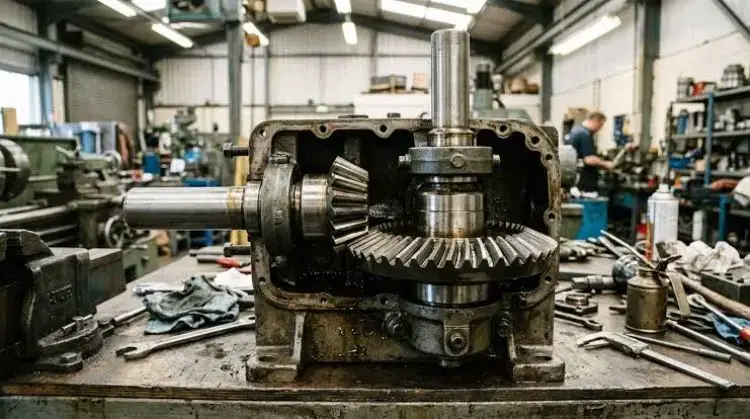
1. Bevel Gears: Precision Machining & Tooth Contact Testing
Bevel gears transmit power between intersecting shafts (e.g., differential gears, heavy‑duty machinery steering boxes).
- Technical Challenges: Complex spatial tooth surfaces (such as spiral or hypoid bevel gears) make heat‑treatment distortion control extremely difficult.
- Supplier Audit Points:
- Do they operate advanced spiral bevel gear generators, gear grinders, and dedicated Gleason or Klingelnberg processing systems?
- Do they possess comprehensive gear meshing test instruments to deliver verified contact pattern and backlash test reports?
2. Spur Gears & Cylindrical Gears: Foundational Process Stability
Spur gears and general cylindrical gears are parallel‑shaft drives featuring straightforward geometry.
- Technical Challenges: Despite their simpler structure, maintaining consistent tooth profile accuracy, pitch error control, surface finish, and material uniformity during volume production sets elite suppliers apart.
- Supplier Audit Points:
- Evaluate the capacity and precision rating of their hobbing, shaping, and CNC grinding equipment (e.g., capability to achieve ISO/DIN Class 6 or AGMA Class 10+ consistently).
- Check their depth of expertise in executing international standards (ISO, DIN, AGMA, JIS).
3. Helical Gears: Smoothness & Axial Force Management
Helical gears feature gradual tooth engagement, high contact ratios, smooth transmission, and low operational noise, making them ideal for high‑speed, heavy‑load gearboxes.
- Technical Challenges: High sensitivity to helix angle accuracy and alignment, along with precise axial thrust calculations.
- Supplier Audit Points:
- Does the supplier’s engineering team possess design optimization capability? When client drawings contain stress concentrations or parameter conflicts, can the supplier proactively propose value engineering (VE) improvements?
3. Five Key Dimensions for Evaluating Gear Suppliers
To ensure your chosen manufacturer stands up to demanding industrial environments, evaluate them across these five critical areas:
1. Material Provenance & Metallurgical Traceability
High‑performance gears begin with premium steel. Whether using alloy structural steel (e.g., 20CrMnTi, 42CrMo/4140), carburizing steel, or stainless steel, suppliers must provide clear raw material Mill Test Certificates (MTC).
- Key Assessment: Does the supplier maintain stable partnerships with tier‑1 steel mills? Can they recommend optimal international material equivalents (EN, ASTM, JIS) tailored to severe operating conditions like low temperatures, corrosive environments, or heavy impact loads?
2. Heat Treatment Capabilities
Heat treatment defines a gear’s structural integrity. Insufficient surface hardness causes premature wear, while inadequate core toughness leads to tooth breakage under impact.
- Key Assessment: Does the supplier manage in‑house atmosphere‑controlled multipurpose furnaces, pit furnaces, and carburizing‑quenching lines, or do they rely on third‑party shops? What is their level of distortion control, and can they provide core‑to‑surface hardness gradient curves and metallographic analysis reports?
3. Quality Assurance & Inspection Equipment
Machining shapes the gear, but quality control guarantees its function.
- Key Assessment: Is the factory equipped with high‑precision Gear Measuring Centers (GMC), Coordinate Measuring Machines (CMM), Ultrasonic Testing (UT), and Magnetic Particle Inspection (MPI) systems? Does their Quality Assurance (QA) workflow cover raw material entry, in‑process machining checks, and final pre‑shipment inspections?
4. Technical Communication & Global Responsiveness
In international procurement, time zone differences, language barriers, and misinterpretations of engineering terminology frequently cause project delays.
- Key Assessment: Can the supplier’s overseas technical team seamlessly read complex engineering drawings, GD&T annotations, and surface treatment callouts? Does the project manager deliver structured production milestone tracking updates?
5. Flexible Customization & Scalable Manufacturing
Modern industrial demand spans low‑volume custom manufacturing to continuous high‑volume production.
- Key Assessment: Does the supplier maintain an integrated supply chain—from blank forging and precision machining to final assembly? Are production capacity allocations healthy, and is their scheduling system agile enough to handle urgent orders or mid‑project drawing modifications?
4. Common Pitfalls in International Industrial Procurement
Procurement teams and mechanical engineers often encounter these recurring mistakes during vendor sourcing:
- Focusing Exclusively on Unit Price: Purchasing low‑cost, lower‑grade gears often results in unexpected downtime, maintenance costs, and field failures that far outweigh any upfront savings.
- Overlooking Regional Standard Differences: National standards—such as GB (China), DIN/EN (Europe), AGMA/ASTM (USA), and JIS (Japan)—contain slight nuances in tolerance classes and heat treatment specifications. A top‑tier supplier must be capable of cross‑referencing and aligning these standards.
- Equating Machine Ownership with Operational Quality: Possessing imported CNC machinery does not automatically guarantee consistent gear quality. Mature quality management frameworks (e.g., ISO 9001, IATF 16949) paired with experienced manufacturing engineers provide the true baseline for reliability.
5. Building Long‑Term Strategic Partnerships
Selecting a high‑caliber supplier for Bevel Gears, Spur Gears, Cylindrical Gears, and Helical Gears means establishing a reliable technical partner for your machinery. From technical drawing reviews and metallurgical verification to on‑time global logistics delivery, every step directly impacts total equipment performance.
Partnering with an engineering‑driven manufacturer ensures your power transmission systems operate smoothly and reliably under demanding conditions worldwide.