
 English
 Español
 العربية
In modern industrial manufacturing and heavy machinery power transmission, gears and industrial drive shafts function as the core “heart and skeleton” of equipment systems. Whether deployed in heavy mining machinery, wind turbine power generation, precision automated production lines, offshore engineering, or heavy‑duty automotive applications, BEVEL GEARS, SPUR GEARS, Cylindrical Gears, and Helical Gears serve as critical components that dictate power transmission efficiency and system stability.
However, when facing demanding operating conditions, extreme load stress, and complex custom engineering drawings, global procurement managers and engineering project leads routinely face multi‑layered challenges: How can machining precision be guaranteed for complex non‑standard parts? How do you maintain strict quality control across vast vendor networks? How can technical communication barriers in international procurement be eliminated? And how can financial pressure be mitigated during long project cycles with high capital tie‑up?
Industrial procurement is not merely a transaction—it is the collaborative realization of an engineering solution. Selecting a strategic supplier that can interpret drawings accurately, deliver defect‑free products, and offer robust financial and supply chain support is essential for minimizing overall project risk.
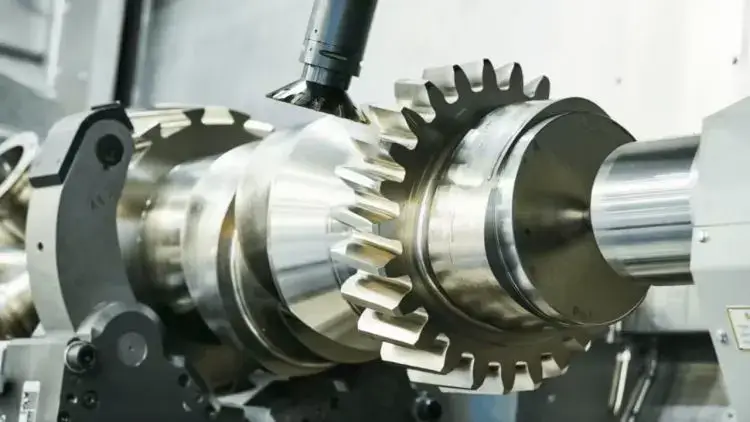
1. Technical Barriers & Customization Requirements of Core Gear Types
In mechanical drive design, different gear types perform distinct power transmission functions. Understanding the key technical features and manufacturing complexities of each gear type provides the foundation for evaluating supplier processing capabilities.
| Gear Type | Primary Transmission Role | Key Manufacturing Focus |
|---|---|---|
| BEVEL GEAR | Intersecting shafts power transfer (e.g., differential, steering boxes) | Tooth profile angle precision & heat‑treatment distortion |
| SPUR GEAR | Parallel shafts simple transmission (e.g., reduce gearboxes, machine tool) | Pitch consistency & material steel purity for high volume |
| Cylindrical Gear | Broad category (Spur & Helical) for modular gearboxes | Precision hobbing/grinding & ISO/DIN/AGMA compliance |
| Helical Gear | Smooth & quiet high‑speed power transmission (e.g., industrial drive) | Helix angle accuracy & axial thrust force management |
BEVEL GEAR: Spatial Curved Surfaces & Heat Treatment Distortion Control
Bevel gears primarily transmit power between intersecting shafts (typically at 90°), encompassing straight bevel, spiral bevel, and curved tooth bevel gears.
- Manufacturing Complexities: The tooth surfaces exhibit complex spatial involute or arc geometries, making them highly susceptible to thermal stress distortion during carburizing and quenching.
- Procurement Focus: Evaluate whether the supplier operates advanced spiral bevel gear generators, high‑precision gear grinders, and dedicated Gleason or Klingelnberg inspection systems, and can provide verified contact pattern and backlash test reports.
SPUR GEAR & Cylindrical Gear: Foundational Process Stability
Spur gears and general cylindrical gears form the most basic and widely utilized drive mechanisms for parallel shafts.
- Manufacturing Complexities: Although structurally straightforward, maintaining tooth profile accuracy, cumulative pitch error tolerances, and surface roughness under high‑volume or heavy‑duty operating conditions directly dictates service life and noise operational thresholds.
- Procurement Focus: Assess the supplier’s machinery precision ratings for hobbing, shaping, and CNC gear grinding (e.g., consistent capability to meet ISO/DIN Class 6 or AGMA Class 10+ standards) alongside raw material metallurgical purity.
Helical Gear: Balancing Axial Thrust & Smooth Engagement
Helical gears engage progressively along inclined tooth lines, delivering high contact ratios, smooth transmission, and low noise levels, making them ideal for high‑speed, heavy‑load gearboxes.
- Manufacturing Complexities: High sensitivity to helix angle machining accuracy, along with axial thrust forces that require precise alignment with bearings and housing designs.
- Procurement Focus: Confirm whether the supplier possesses engineering capabilities to execute drawing‑based helix angle micro‑adjustments, tooth profiling, and lead modification to enhance fatigue resistance life.
2. Hidden Costs & Quality Baselines in Procurement Decisions
In global industrial sourcing, procurement teams frequently fall into the trap of focusing exclusively on initial unit price. However, the true total cost of ownership (TCO) for industrial drive components extends beyond the invoice price, encompassing hidden supply chain operational risks and downtime penalties.
The Multiplier Effect of Quality Defects
As core power transmission nodes, gear failures through early wear, tooth stripping, or breakage inflict damage far exceeding the replacement cost of a single gear:
- Unplanned Downtime: Non‑scheduled halts in mining, wind power, or factory automation lines can cause tens of thousands of dollars per hour in lost throughput.
- Cascading Machinery Failure: Gear debris rapidly damages adjacent bearings, drive shafts, and complete gearbox housing assemblies.
- Field Service Claims: On‑site disassembly, international technicians, and emergency field repairs generate exorbitant warranty liabilities.
Maintaining a strict quality baseline is essential to safeguarding capital return on investment. A qualified supplier must enforce end‑to‑end quality traceability from raw material receiving through final dispatch.
From Component Sourcing to Integrated Custom Transmission Systems
In practical industrial projects, clients rarely require isolated gears; they require fully integrated drive systems matching herringbone gear shafts, drive shafts, industrial shafts, spline shafts, and custom gearboxes.
Sourcing gears and shafts from separate machine shops frequently leads to cumulative tolerance stack‑ups, improper spline fit (overly tight or loose), and axial float issues during site assembly. Choosing a vendor capable of providing custom blueprint‑based manufacturing for both gears and shaft drive systems eliminates assembly incompatibility at the source.
3. How Capable Gear Suppliers Value‑Engine and Support Clients
In navigating global procurement complexities, an expert power transmission vendor serves as an extended partner for client engineering and purchasing departments.
Maintaining the Quality Baseline: Zero‑Defect Commitment & Rigorous QA
Quality is the non‑negotiable baseline of industrial manufacturing. To guarantee every delivered part fully aligns with client engineering drawings and global standards, leading vendors implement full‑lifecycle QA management:
- Metallurgical Traceability: Full raw material Mill Test Certificates (MTC) conforming to EN 10204 3.1 from tier‑1 steel mills (e.g., 20CrMnTi, 42CrMo/4140), ensuring freedom from internal porosity or slag inclusions.
- Controlled Heat Treatment: In‑house or strictly managed atmosphere carburizing, nitriding, and induction hardening lines that control Effective Case Depth (ECD) and core toughness balance, backed by hardness gradient curves and metallographic reports.
- Nondestructive Testing (NDT) & Precision Metrology: Gear Measuring Centers (GMC), Coordinate Measuring Machines (CMM), Ultrasonic Testing (UT), and Magnetic Particle Inspection (MPI) ensure zero surface or subsurface micro‑cracks.
Mitigating Financial Pressure: Flexible Capital & Payment Terms for Enterprise Clients
Long production schedules and slow capital recovery are common in heavy equipment manufacturing and long‑cycle industrial projects. Purchasing large volumes of custom gears and shafts can place heavy demands on working capital.
- Distributing Capital Strain: For long‑term enterprise clients and major EPC projects, financially stable suppliers leverage strong credit and capital foundations to provide flexible settlement structures (such as Letters of Credit L/C, bank acceptance bills, phased milestone payments, or extended credit terms).
- Optimizing Cash Flow: Assisting clients in sharing upfront procurement and raw material stocking burdens frees up working capital for core R&D and market expansion.
Supply Chain Integration: Resolving Complex Procurement Bottlenecks
Industrial procurement frequently involves complex requirements—such as low‑volume custom batches, specialized alloys, tight schedules, and non‑standard geometries—that a single machine shop cannot cover independently.
- End‑to‑End Resource Orchestration: Capable suppliers leverage integrated supply chain networks to execute large‑module heavy gears, corrosion‑resistant alloys, deep‑hole shaft machining, and specialized surface coatings efficiently under a single point of contact.
- Streamlined Sourcing Efficiency: Clients eliminate the overhead of managing dozens of individual steel mills, heat treatment facilities, and machining shops, dealing instead with a unified technical interface.
Technical Communication Efficiency: Saving Engineering Time & Resources
One of the most persistent issues in cross‑border procurement is technical miscommunication—discrepancies between remote engineering teams and factory machinists regarding drawing callouts, GD&T annotations, or standard conversions (such as GB, DIN, ASTM, and JIS) that cause sample rejections and project delays.
- Seamless Technical Alignment: Overseas engineering support teams seamlessly review complex technical drawings, geometric tolerances, and surface finish specifications.
- Proactive Value Engineering (VE) Feedback: Evaluating technical drawings from a manufacturability standpoint allows teams to proactively identify stress concentration points or overly costly tolerances, offering practical optimization proposals that reduce cost while enhancing part reliability.
- Transparent Milestone Tracking: Providing clear Production Milestone Tracking reports gives procurement managers complete visibility into project status without requiring constant manual follow‑ups.
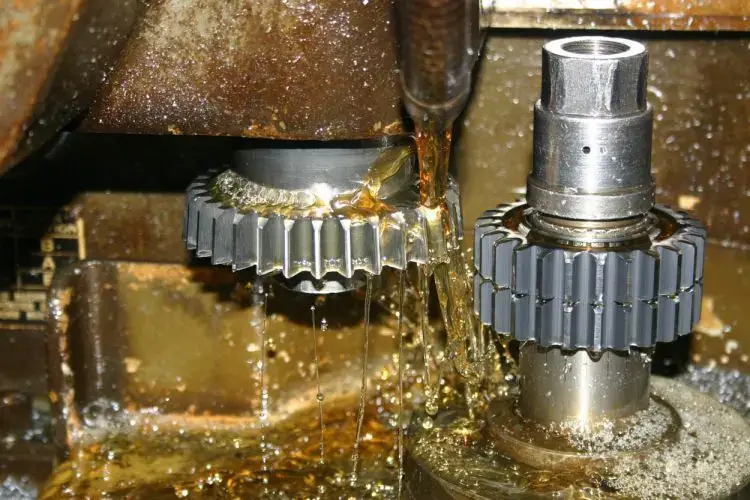
4. Evaluation Checklist for International Gear Sourcing
Prior to issuing purchase orders or establishing long‑term strategic supply agreements, procurement teams should audit potential manufacturers against the following criteria:
| Assessment Area | Verification Details | Expected Standard |
|---|---|---|
| Material & Traceable | – Raw material steel source (MTC) – Internal defect detection | – ISO 10474 / EN 10204 3.1 – Ultrasonic Inspection (UT) |
| Processing & Quality | – Machining equipment precision – Gear inspection equipment | – DIN 6 / AGMA 10+ level – GMC / CMM / Contact Pattern |
| Heat Treatment | – In‑house/control environment – Deformation control capability | – Hardness gradient test report – Metallographic structure check |
| Supply Chain & Tech | – Drawing customization capability – Flexible financial payment terms | – System‑level assembly supply – English engineering support |
- Material Certification & Traceability: Capability to issue EN 10204 3.1 certified material test reports for every production heat batch.
- Machining & Metrology Fleet: Ownership of high‑precision gear generators, CNC grinders, and GMC metrology centers covering BEVEL GEARS, SPUR GEARS, Cylindrical Gears, and Helical Gears.
- Heat Treatment Process Control: In‑house or fully controlled heat treatment capabilities with hardness gradient testing and metallographic analysis.
- Custom Blueprint System Integration: Demonstrated capability to manufacture drive shafts, spline shafts, and complete gear drive assemblies according to client engineering drawings.
- Commercial & Communication Flexibility: Multilingual technical communication and flexible commercial payment terms for key accounts.
5. Conclusion: Building Long‑Term Strategic Partnerships
Selecting the right supplier for BEVEL GEARS, SPUR GEARS, Cylindrical Gears, and Helical Gears goes far beyond purchasing individual mechanical components. It establishes an engineering and supply chain alliance that safeguards equipment performance and operational continuity.
In today’s competitive industrial market, partnering with a vendor committed to quality, blueprint‑based custom manufacturing, flexible commercial support, and clear technical communication provides a strategic advantage that reduces overall costs and mitigates operational risk.